
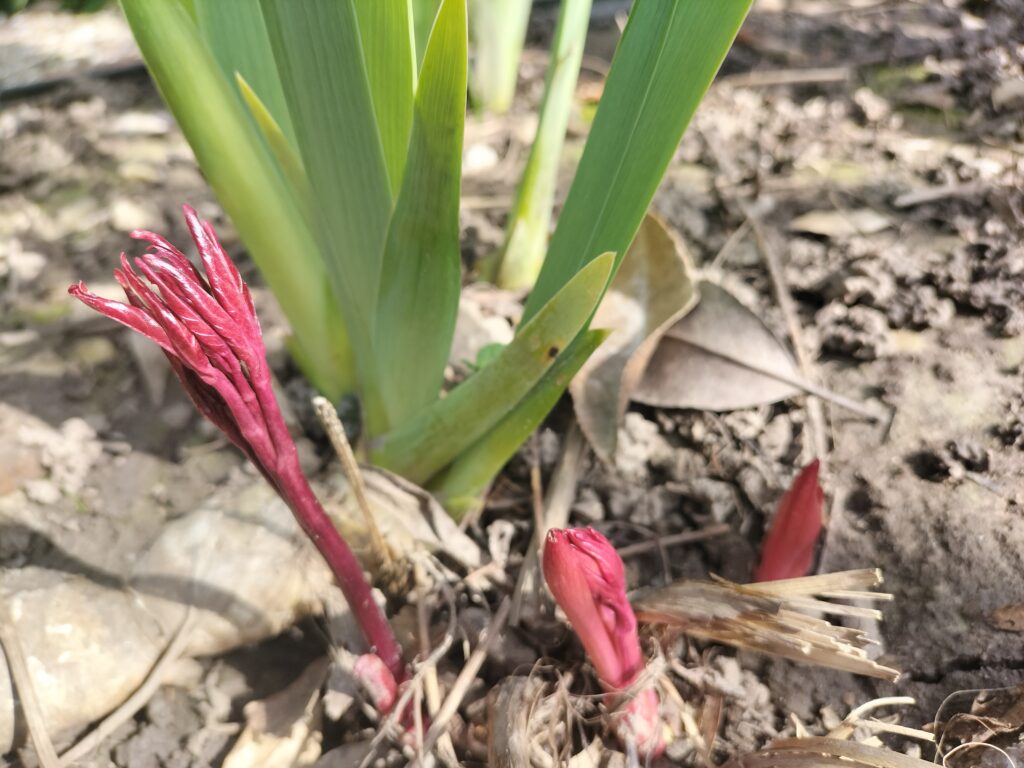
New life pushing its way up through the darkness and into the light
These verses at the end of Matthew have long been understood as a command for Christians to get out there and convert people. Not just our friends and neighbours, but people in far-off countries, right to the ends of the earth. The call to evangelise people who don’t want it is difficult enough, but worse than that, the history of Christian missions is intertwined with the history of colonialism. Is there a way to interpret these verses in a more life-giving way?
A disciple is someone who follows a leader, who seeks to learn from them, to live like them, to imitate the good things about them. I suggest that this is mostly behavioural, and that what a disciple actually believes about the ontological nature of their leader only matters in as far as it affects their behaviour. Making disciples is more about supporting and encouraging people to follow a certain path – expressed in these verses as obeying Jesus’s commands. This is where it gets interesting. What did Jesus actually command? Compared to the volumes of theological statements made over the years, he commanded remarkably little, and the few commands he gave seem to be grounded in love, for example:
“You shall love the Lord your God with all your heart, and with all your soul, and with all your mind.” This is the greatest and first commandment. And a second is like it: “You shall love your neighbour as yourself.” Matthew 22:37-39
I give you a new commandment, that you love one another. Just as I have loved you, you also should love one another. John 13:34
But I say to you, Love your enemies and pray for those who persecute you. Matthew 5:44
In everything do to others as you would have them do to you; for this is the law and the prophets. Matthew 7:12
These are values that, were they adopted worldwide, would result in massive changes for the better. This isn’t a list of religious tenets to believe in, these are commands to follow the way of love as incarnated in Christ. This is what we are called to encourage and support in others.
The other potential sticking point is the matter of baptism. This symbolic act marks a major life transition, traditionally a turning away from sin and turning to Christ – couched in the extreme terms of dying to sin and rising to new life (although for many of us the turn from darkness to the light is more gradual.) The important thing is the turning from darkness to light, turning away from a destructive way of life to a more constructive one, not the marking of that turn, helpful though that may be.
What then might this mean in practise? To make disciples of Christ in a culture that is hostile to Christianity or that has a different spiritual identity, we need to interpret our understanding of Christ and his commands into language and concepts that make sense. For people who already adhere to some sort of religion or philosophy, this might mean supporting them to dig deeper. For someone with no obvious interest in spirituality, it might mean encouraging them to reflect on their inner life, to consider what their values are and how they might want to live them out more fully. We can encourage others to seek the gift of a rich spiritual life, but I don’t think we need to feel obliged to insist that people ascribe to a certain set of beliefs. Discipleship is about following the way of love, and that can be expressed in as many different ways are there are human beings.