The Gospel of Mary Magdalene

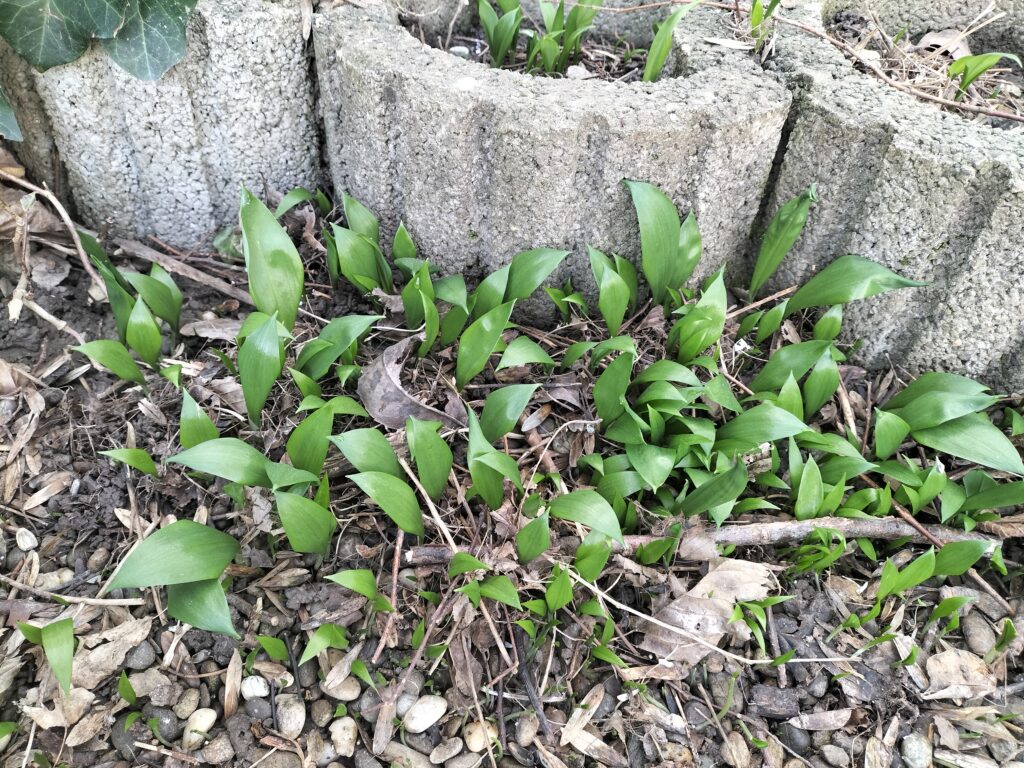
Wild garlic filling the vacuum.

I recently came across the Gospel of Mary Magdalene, a short text that wasn’t included in the New Testament canon when the council of Nicaea met just over 1700 years ago. It contains some beautiful words that bring me great joy, given my love of inner and outer gardening. Let me share a few of them with you:

The Saviour answered: “All that is created, everything that is formed, every natural thing, all exist interdependently in and with each other. Then each will be dissolved again back into its own roots. It is [the way of] nature that everything will eventually decompose back into its own elements. Those who have ears, let them hear…This is why the Good has come into your midst, pursuing [the Good] which is in everyone’s true nature, to restore it inward to its root.”

You can read the full text here.

Make disciples of all nations?

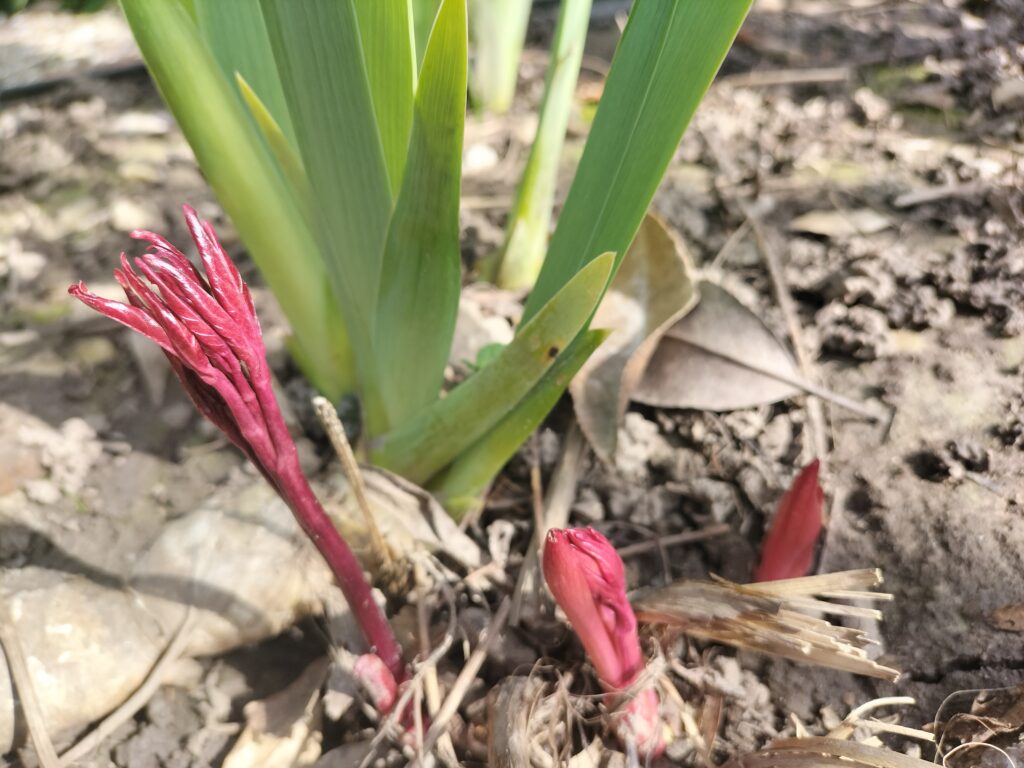
New life pushing its way up through the darkness and into the light

Matthew 28:18-20

These verses at the end of Matthew have long been understood as a command for Christians to get out there and convert people. Not just our friends and neighbours, but people in far-off countries, right to the ends of the earth. The call to evangelise people who don’t want it is difficult enough, but worse than that, the history of Christian missions is intertwined with the history of colonialism. Is there a way to interpret these verses in a more life-giving way?

A disciple is someone who follows a leader, who seeks to learn from them, to live like them, to imitate the good things about them. I suggest that this is mostly behavioural, and that what a disciple actually believes about the ontological nature of their leader only matters in as far as it affects their behaviour. Making disciples is more about supporting and encouraging people to follow a certain path – expressed in these verses as obeying Jesus’s commands. This is where it gets interesting. What did Jesus actually command? Compared to the volumes of theological statements made over the years, he commanded remarkably little, and the few commands he gave seem to be grounded in love, for example:

“You shall love the Lord your God with all your heart, and with all your soul, and with all your mind.” This is the greatest and first commandment. And a second is like it: “You shall love your neighbour as yourself.” Matthew 22:37-39

I give you a new commandment, that you love one another. Just as I have loved you, you also should love one another. John 13:34

But I say to you, Love your enemies and pray for those who persecute you. Matthew 5:44

In everything do to others as you would have them do to you; for this is the law and the prophets. Matthew 7:12

These are values that, were they adopted worldwide, would result in massive changes for the better. This isn’t a list of religious tenets to believe in, these are commands to follow the way of love as incarnated in Christ. This is what we are called to encourage and support in others.

The other potential sticking point is the matter of baptism. This symbolic act marks a major life transition, traditionally a turning away from sin and turning to Christ – couched in the extreme terms of dying to sin and rising to new life (although for many of us the turn from darkness to the light is more gradual.) The important thing is the turning from darkness to light, turning away from a destructive way of life to a more constructive one, not the marking of that turn, helpful though that may be.

What then might this mean in practise? To make disciples of Christ in a culture that is hostile to Christianity or that has a different spiritual identity, we need to interpret our understanding of Christ and his commands into language and concepts that make sense. For people who already adhere to some sort of religion or philosophy, this might mean supporting them to dig deeper. For someone with no obvious interest in spirituality, it might mean encouraging them to reflect on their inner life, to consider what their values are and how they might want to live them out more fully. We can encourage others to seek the gift of a rich spiritual life, but I don’t think we need to feel obliged to insist that people ascribe to a certain set of beliefs. Discipleship is about following the way of love, and that can be expressed in as many different ways are there are human beings.

Stressing over seeds

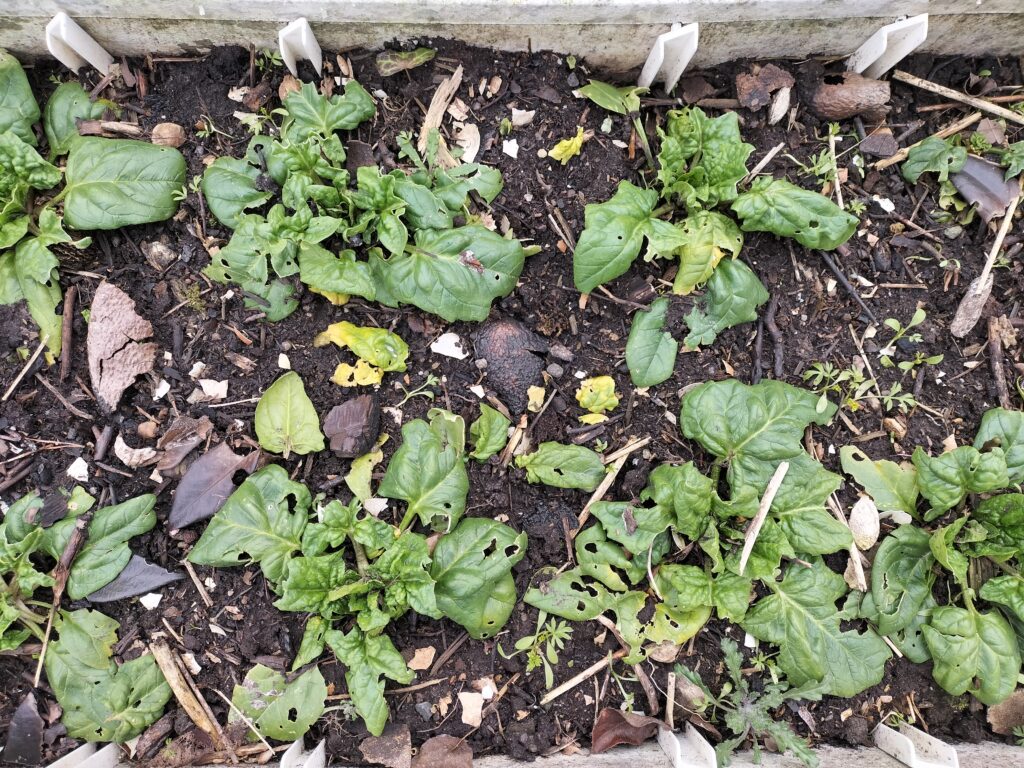
Some spinach holding its own against the cold of the winter and visits from the pheasant.

As part of our house hunting efforts, last Sunday we visited a church that sits five minutes from a place we have our eye on. This was a very friendly, welcoming congregation and would be very convenient, but I know that it isn’t for us. Apart from not being my preferred style of worship, which perhaps I ought to be able to get over, I was put off by the altar call with a sinners’ prayer beginning ‘despite deserving outer darkness…’ and an injunction to the rest of us to get out there and evangelise.

My reading for this morning was the growing seed. It paints a picture of a mysterious process, whereby seed sown grows on its own, without any effort on the part of the farmer, resulting in a harvest that just needs to be gathered in. The farmer doesn’t go out to his field every day and fret over the seeds, he doesn’t coax, threaten or cajole then into sprouting and growing – he trusts that the mysterious alchemy of soil, sun and moisture will do its work.

Perhaps this is just my personal bias against evangelism, forged in the conflict between the expectations of certain forms of churchmanship and my own introversion, shyness and hatred of conflict, but trying to persuade people to become Christian feels like a farmer fretting over his seeds. It feels like so much stressful labour with, I suspect, diminishing returns these days.

It looks like our job is to sow seeds and gather the harvest. That will look a little different for each one of us, and might even mean standing on street corners for some, but definitely not for me.

RIP Nigel

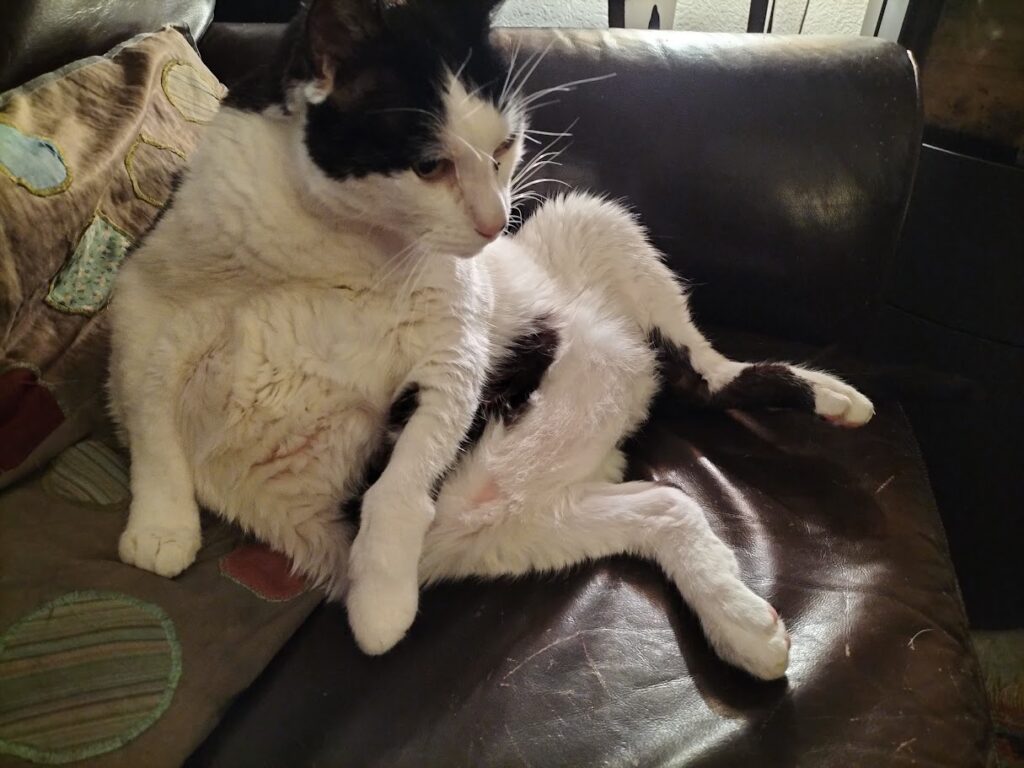
This is Nigel sitting ‘like a human’ in his least flattering pose.

Nigel’s early life is shrouded in mystery, but his two spells at the pet rescue center and subsequent three months under the sofa suggest that it was troubled. But once finally settled in the bosom of the family during Covid, he relaxed had started to enjoy the good life. Nigel would sit on our laps when we rested and show us the importance of being still, taking one day at a time and not worrying and fretting over many things. He was the glue that held the family together and we will miss him dearly. Here follow some of the words we said at his graveside.

Nigel, you were the best cat. We will miss you for:

The way that you use to sit like a human,
clean between your toes,
and leave a dent in the sofa.

The way you would eat anything and everything,
howl for food an hour before dinner time,
and angrily turn around your bowl so we couldn’t reach to put the biscuits in.

The way you stole our sleep by kneading at our hair,
crying to be let out at 3am,
and then hiding under the table.

The way you dozed away the summer under the rosemary bush,
chirped at insects as you chased them,
and never posed a threat to bird or mouse.

The way you weed on the bathroom mat,
on piles of clothes,
and unguarded shoes.

The way you pooed next to your litter tray, so we stepped on it in the dark,
enjoyed the smells of smelly boots and dirty clothes,
and didn’t waste much time on grooming your coat.

The way you got the cat next-door to defend your territory for you,
snuggled deep into us,
and were a warm scarf around our necks.

The way you licked the cutlery in the dishwasher,
pretended you hadn’t been fed,
and helped mother with her yoga.

The way you drank water from pot plant drip-trays,
from the algae-choked pond,
and, if all you had was the water in your bowl, how you spilt it.

The way you came running at the sound of a scraped bowl,
the crack of an egg,
or the smell of tuna.

RIP Nigel, May 2011-November 2025

Blood Over Bright Haven

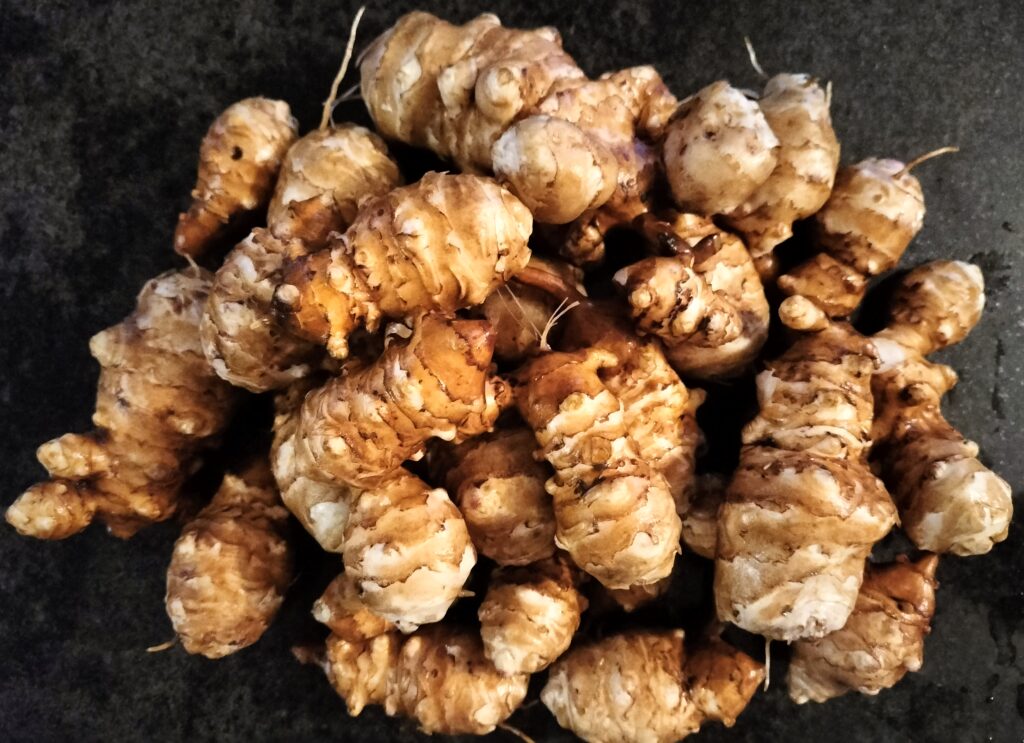
A fine harvest of Jerusalem artichokes, and what I didn’t find will be a gift to the next tenders of my garden (whether they like it or not!)

It is a fact, that for me to live, something else must die – even if it is only the death of a carrot, ripped out of the ground before it has a chance to produce seeds and generate more life. This is a simple example, but what about the deaths we aren’t generally confronted with, but without which our way of life would be impossible? I’m thinking in particular of the impact on people and planet of our consumeristic lifestyles.

In her brilliant book Blood Over Bright Haven, M. L. Wang confronts this issue, as well as the interconnected issues of feminism, racism and colonialism. The story is set in a fantasy world led by an intellectual elite of mages, whose work is defined and justified by religious precepts handed down since the foundation of the society. The main character, Sciona, is the first woman to enter the corridors of magical power. What she discovers there is more than she had bargained for, and her commitment to truth sets her on a path with no happy ending.

Although worth reading for the story itself, this book is even more significant for the way it makes you think and draw your own parallels. It articulates the challenges we are facing at this time in history in a stark and powerful way, bringing into focus what we prefer not to think about. She is not gentle with her readers, and some might think she pushes too far, but I think she exaggerates to make a valid point.

The story doesn’t resolve the issues raised, but I love the way it honestly addresses the challenges and consequences of ‘lifting the veil’ on what’s really going on. My favourite quote: Sciona was proof that hope didn’t have to mean living to the end of the story.

The storm

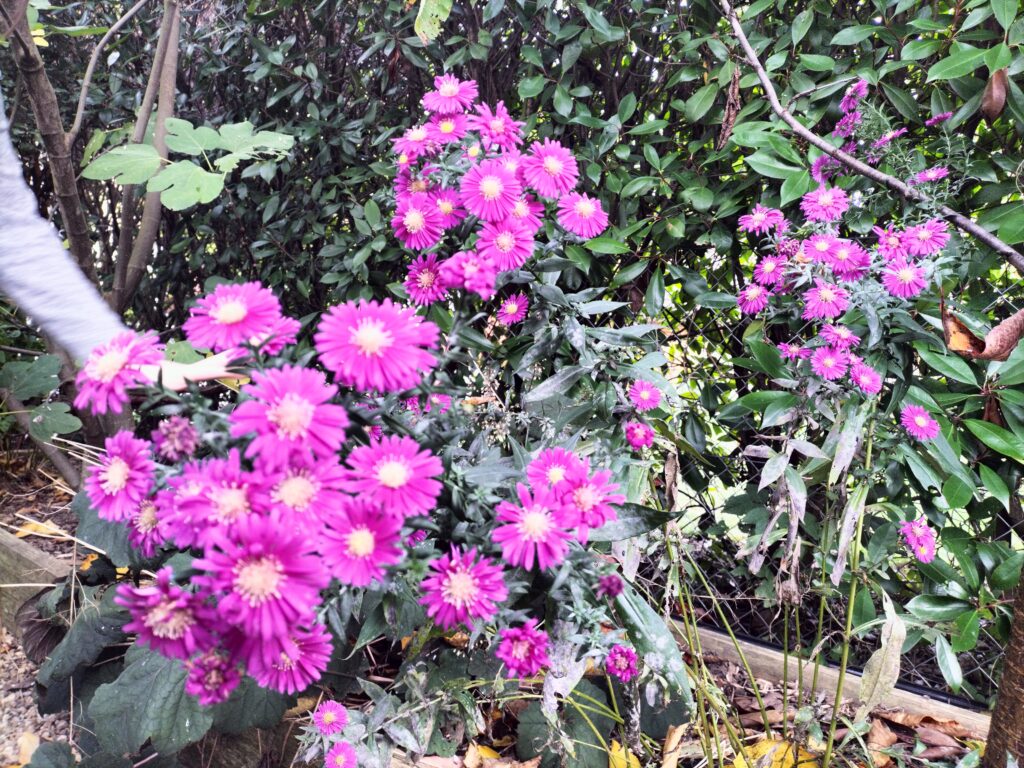
It was a lovely surprise to discover this beautiful Michaelmas daisy blooming in a hidden corner of my garden a few weeks ago.

A couple of weeks ago, there was a very violent storm. High winds swept through my garden and seemed to have made their entrance principally through the gateway, which I suppose isn’t unreasonable. Over the gate, I had constructed an archway and planted a honeysuckle – six years on, the honeysuckle has enthusiastically grown up and over the arch with a series of thick stems wrapped around the, unfortunately, none too robust structure. When the strong winds blew, the weight of the honeysuckle was just too much and the whole thing collapsed. The sight of the jumble of stems and bits of metal pole was so discouraging – how was I ever going to disentangle the honeysuckle from the archway? Would I be able to repair it? Would the honeysuckle survive? I soon realised that the only answer was some serious pruning. Not only were the stems wrapped throughout the structure, but they were extremely tightly attached – so tightly that it was difficult to cut through the stems without damaging the metal structure beneath. After an extended period of careful cutting and untangling, I managed to release the archway and rebuild it with duck tape (what would I do without it? – Mend things properly?!) I then took the remaining 20% of the honeysuckle and rethreaded it through the archway. A silver lining was the fun of feeding the discarded branches into the shredder and returning them to the garden as mulch.

A number of lessons could be drawn from this experience, but what comes to my mind are the verses at the beginning of Hebrews 12, and in particular: Therefore, since we are surrounded by so great a cloud of witnesses, let us also lay aside every weight and the sin that clings so closely, and let us run with perseverance the race that is set before us.

Recently I have feeling a bit like the broken archway, collapsed under the weight of the overgrown honeysuckle. My mind is totally preoccupied, my body is tense and aching, and my spirit seems to have checked out for the time being. And as for the great crowd of witnesses, these might just be the sparrows and bluetits crowding around our birdfeeder, apparently without a care in the world. What is going on with me?

Perhaps now that the winds of change in their various forms are blowing through my life, they are exposing the extent of the ‘weight and sin that clings so closely’ rather like the tightly-bound honeysuckle. ‘Sin’ is a word with all sorts of unhelpful connotations, but essentially it describes anything that separates us from God – anything that pushes us away from that place of awareness of our deep connection with the Divine. All those times when I feel bad about myself and how I show up in the world are fertile ground for the ‘bad spirit’ that Ignatius of Loyola spoke of to drag me down.

Rather than talk of the bad spirit, I prefer to blame my darker moods on the patterns that seem to be hardwired into my being – the default ways of interpreting my place in reality that served as a survival strategy at one point in time, but which are now well past their sell-by date. These ways of responding need to be pruned away, and that job might be easier if I can lessen their grip on me – perhaps by taking them a little less seriously?

Woodlice, aubergines and empathy

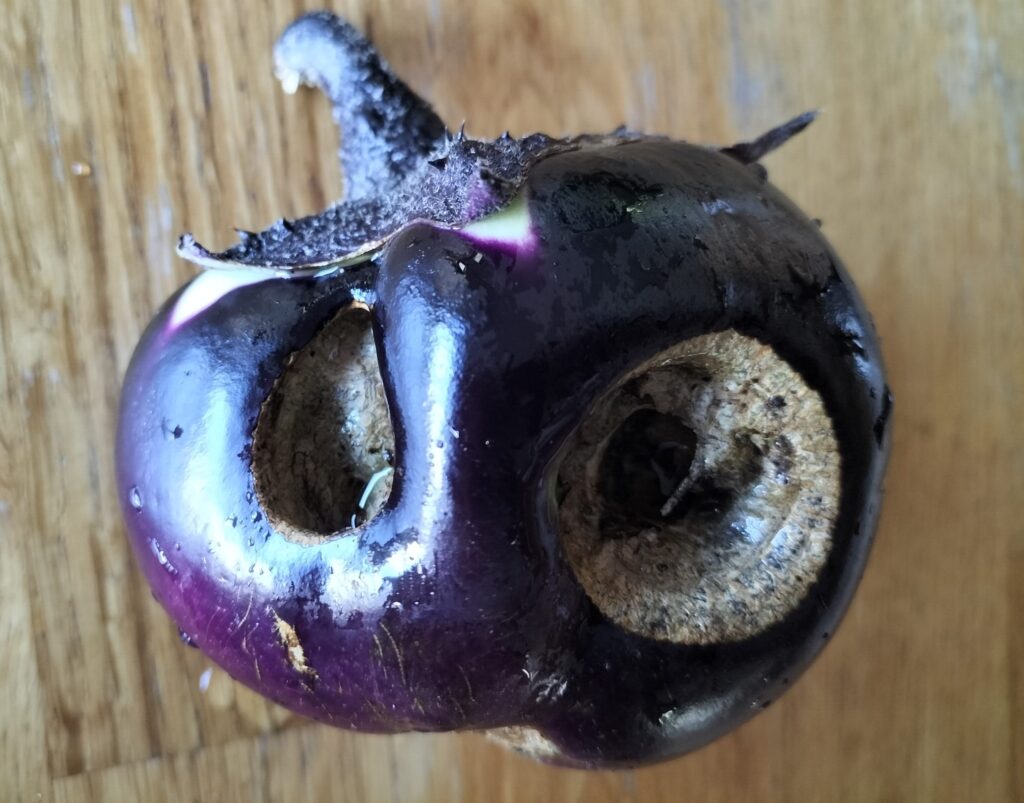
This aubergine closely resembles the ones I write about below.

My daughter recently queried a statistic she read in a fundraising magazine: 17% of the Swiss population have been subject to racial discrimination. She wondered whether a more helpful statistic might be to know what proportion of the Swiss BAME population has been subject to racial discrimination, but as I pointed out to her, we tend to only really care about what happens to people when we can identify with them ourselves. If the charity in question wants to raise money from the average, probably white, Swiss person, it needs to articulate the problem from the perspective of the Swiss population as a whole.

I thought back to this discussion the other day when I was harvesting two small, sorry-looking aubergines. As previously mentioned, the slugs have had a bumper year in my garden, and these pathetic specimens were not spared. The slugs had eaten their way right through them, creating tunnels for the convenience of other insects looking for a home. I took out my knife and started to cut out the eaten parts in order to salvage what I could of the remaining flesh. I displaced a woodlouse from the first aubergine, but didn’t think much of it. When I cut into the second aubergine, however, I discovered a whole woodlouse family with a few tiny woodlice. I felt absolutely dreadful, I had not only destroyed their home but also broken up the family. I made a pathetic attempt to reunite them as I put the remains carefully in the compost heap.

I know this probably sounds absurd, but I identified strongly with the woodlouse mother and her care for her offspring. I realise that this is anthropomorphism taken to an extreme, but I’m a sensitive soul, and it’s how I felt.

Who is my neighbour?

The Nicene creed

Homemade pasta: last week’s mandatory fun!

I was recently asked to write something about what in the Nicene creed inspired me to care for creation. This is what I came up with (video version available on Facebook)

What strikes me as I read through the Nicene creed are the words ‘maker of heaven and earth, of all that is, seen and unseen’, and in particular, the word ‘unseen’. At first glance, this looks like a catch-all word for things that aren’t visible, maybe the supernatural, but for me it evokes a sense of awe and wonder.

What we see and perceive with the rest of our senses is just the tip of the iceberg. Walk through a forest in the autumn and you’ll find mushrooms, but these are a tiny part of the whole organism, the fruiting bodies that pop up above the surface at an opportune moment, while hidden beneath the ground is a vast fungal network connecting plants and trees through their roots, continuously exchanging resources and information.

This time of year is graced by the beautiful colours of autumn leaves as they return their strength to the tree and prepare to fall. These changing colours are due to the staged decomposition of different light-capturing molecules in the leaf: the green chlorophyll decomposing more rapidly than the yellow and orange coloured molecules, and then the sugars trapped in the leaves are changed into red pigments. This unseen process gives the glorious pallet of fiery colours, which brings us such joy.

And within the cells of our own bodies, there is incredible intricacy at the molecular level – finely-tuned mechanisms that allow us to breathe, digest and fight off infections. We are fearfully and wonderfully made.

I recently watched a film which powerfully juxtaposed stunning images of strange, alien and beautiful creatures, previously hidden unseen in the deep sea, with footage of the indiscriminate destruction of their habitat, by mining companies looking for mineral deposits. I found it devastating.

My sense of wonder at the unseen mysteries of creation motivates me to do what I can to preserve our common home. My efforts are small and unimpressive, and may not make much difference in the long run, but I chose to do what I can and to trust the bigger picture into the hands of God the father, maker of heaven and earth, of all things, seen and unseen.

Psalm 139

This was the gorgeous view I saw from the window during my retreat. With much gratitude to my hosts.

I recently spent a week away in silence, seeking to clear my head and find my way back to an awareness of God after a particularly intense period. I am grateful to have had the time to do this and the gift of somewhere beautiful to stay.

In prayer, I had a rare experience of deep peace; I felt safe, held and nurtured, I felt like my inner being was resting within the womb of God. I later reflected on Psalm 139:13-15 and saw my inner being in a process of still being formed:

God keeps forming my inward parts,
She knits me together in her womb.
My frame is not hidden from her
As I am being made in secret,
Intricately woven in the depths of my being.

I believe that this total intimacy with the divine is true for all of us, whether we feel it or not, God holds all things within herself – yes God lives in us, but it is also true that we live in God in whom we ‘live and move and have our being’ (Acts 17:28). Not just human beings, but all the other beings, and even all matter, dwell within God and thus are sacred and deserving of our deepest respect and love.

On being forced to share

The greatest success of my garden this year: pattypan squash.

When I was planning my vegetable garden for 2025, I knew that it would be no ordinary year. My father had just died, and my mother was going to need my support, which would mean being away from my garden for extended periods of time, so I decided to do things a little differently. I chose a less ambitious range of seeds and included varieties I hadn’t grown before, like pattypan squash, feeling that I had less to lose than usual. Little did I know at that point that life held even more disruption in store, including a move back to the UK to plan, meaning that the garden got even less attention this year than normal.

My lack of time and attention has had direct consequences on the harvest. I got a fraction of the figs, because, due to my failure to keep them under surveillance, birds took all the fruit from the top of the tree. Many of my tomato plants are only half tied-up and are drooping down under the weight of unripe fruit, which the slugs have been demolishing while still green. I have decided to find a redemptive way of viewing this situation. The birds of the air, who neither sow nor reap nor gather into barns, have been fed, and I have been inadvertently loving my slimy enemies (Matthew 6:26, Matthew 5:44).

The pattypan squash, however, have been an enormous success – but I don’t really know what to do with them…