The Gospel of Mary Magdalene

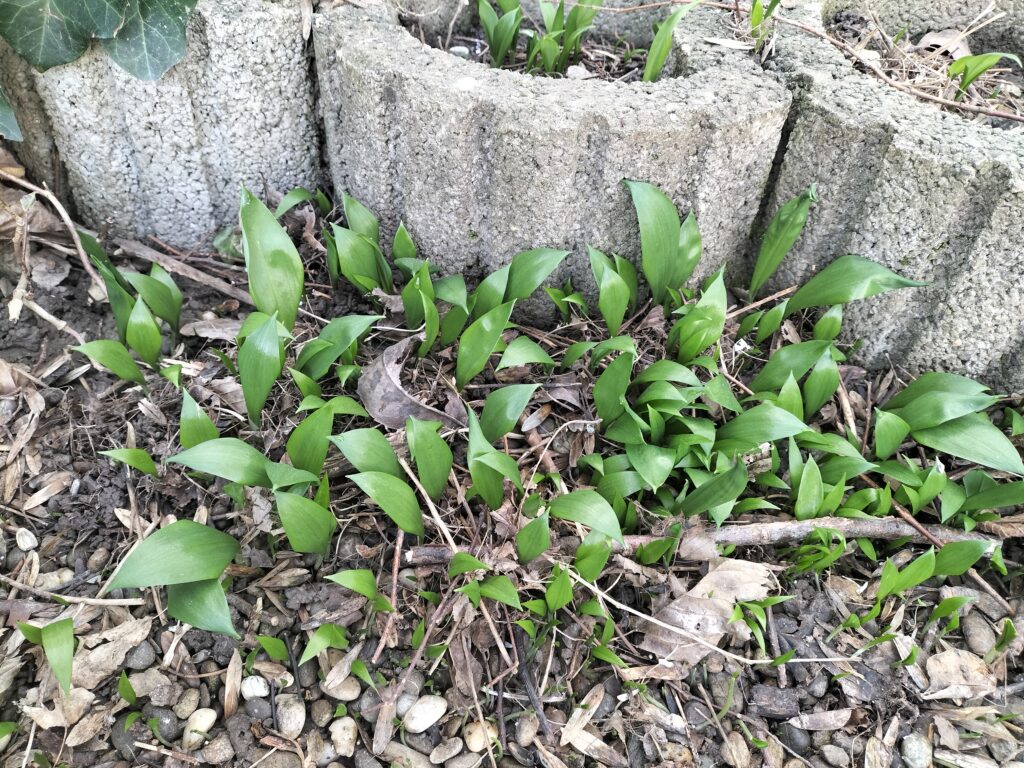
Wild garlic filling the vacuum.

I recently came across the Gospel of Mary Magdalene, a short text that wasn’t included in the New Testament canon when the council of Nicaea met just over 1700 years ago. It contains some beautiful words that bring me great joy, given my love of inner and outer gardening. Let me share a few of them with you:

The Saviour answered: “All that is created, everything that is formed, every natural thing, all exist interdependently in and with each other. Then each will be dissolved again back into its own roots. It is [the way of] nature that everything will eventually decompose back into its own elements. Those who have ears, let them hear…This is why the Good has come into your midst, pursuing [the Good] which is in everyone’s true nature, to restore it inward to its root.”

You can read the full text here.

Make disciples of all nations?

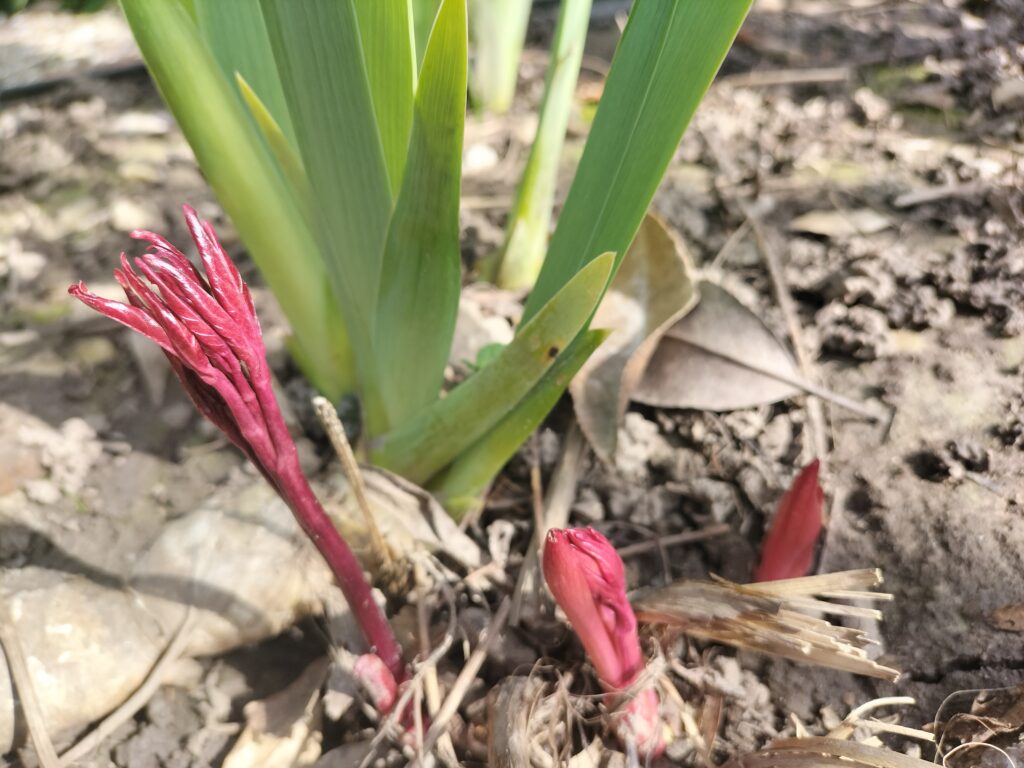
New life pushing its way up through the darkness and into the light

Matthew 28:18-20

These verses at the end of Matthew have long been understood as a command for Christians to get out there and convert people. Not just our friends and neighbours, but people in far-off countries, right to the ends of the earth. The call to evangelise people who don’t want it is difficult enough, but worse than that, the history of Christian missions is intertwined with the history of colonialism. Is there a way to interpret these verses in a more life-giving way?

A disciple is someone who follows a leader, who seeks to learn from them, to live like them, to imitate the good things about them. I suggest that this is mostly behavioural, and that what a disciple actually believes about the ontological nature of their leader only matters in as far as it affects their behaviour. Making disciples is more about supporting and encouraging people to follow a certain path – expressed in these verses as obeying Jesus’s commands. This is where it gets interesting. What did Jesus actually command? Compared to the volumes of theological statements made over the years, he commanded remarkably little, and the few commands he gave seem to be grounded in love, for example:

“You shall love the Lord your God with all your heart, and with all your soul, and with all your mind.” This is the greatest and first commandment. And a second is like it: “You shall love your neighbour as yourself.” Matthew 22:37-39

I give you a new commandment, that you love one another. Just as I have loved you, you also should love one another. John 13:34

But I say to you, Love your enemies and pray for those who persecute you. Matthew 5:44

In everything do to others as you would have them do to you; for this is the law and the prophets. Matthew 7:12

These are values that, were they adopted worldwide, would result in massive changes for the better. This isn’t a list of religious tenets to believe in, these are commands to follow the way of love as incarnated in Christ. This is what we are called to encourage and support in others.

The other potential sticking point is the matter of baptism. This symbolic act marks a major life transition, traditionally a turning away from sin and turning to Christ – couched in the extreme terms of dying to sin and rising to new life (although for many of us the turn from darkness to the light is more gradual.) The important thing is the turning from darkness to light, turning away from a destructive way of life to a more constructive one, not the marking of that turn, helpful though that may be.

What then might this mean in practise? To make disciples of Christ in a culture that is hostile to Christianity or that has a different spiritual identity, we need to interpret our understanding of Christ and his commands into language and concepts that make sense. For people who already adhere to some sort of religion or philosophy, this might mean supporting them to dig deeper. For someone with no obvious interest in spirituality, it might mean encouraging them to reflect on their inner life, to consider what their values are and how they might want to live them out more fully. We can encourage others to seek the gift of a rich spiritual life, but I don’t think we need to feel obliged to insist that people ascribe to a certain set of beliefs. Discipleship is about following the way of love, and that can be expressed in as many different ways are there are human beings.
Brace/embrace

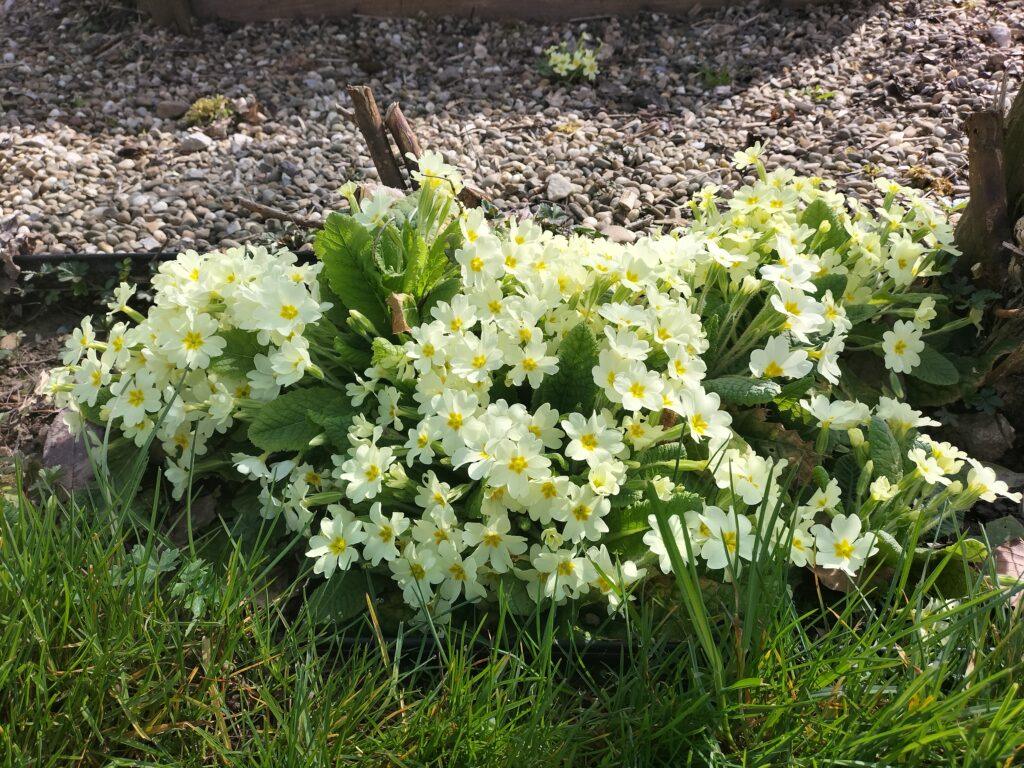
Spring is officially the best season.

Rainer Maria Rilke’s beautiful poem Go to the Limits of Your Longing contains the striking words:

Let everything happen to you: beauty and terror.

They inspire me to live life in a stance of openness, with arms outstretched to welcome what comes, and the flexibility to absorb the shocks. A position of embrace. However, recently I have been a million miles from that. Rather, I am holding myself in brace position, permanently tensed up and ready to defend myself against the next problem that comes. This is entirely counterproductive, as a rigid structure cannot absorb shocks but rather shatters, and in my case this is being expressed in chronic lower back pain that I don’t seem able to shift.

How I respond to events will not change their essential nature of beauty or terror, but whether I hold myself in brace or embrace position will affect how I live my response. It might help me to live in embrace position if I fully take on board that God is holding me safe in her womb and that a spiritual ‘umbilical chord’ deep inside of me connects me with the Divine, whether I feel it or not.

Protestant guilt and Ignatian desire

An embarrassment of riches!

I seem to bear a lot of ‘protestant guilt’. For a long time, my anchor text was Luke 12:48 From everyone to whom much has been given, much will be required; and from one to whom much has been entrusted, even more will be demanded – aware that I have been given so much, I have felt under a constant obligation to give more of myself, without much consideration for my own well-being. This kind of thinking made it extremely difficult to say no to a request when I had the time and capacity to answer it. All these obligations crowded out my soul to the point that I couldn’t hear what she needed. I repeatedly ended up overwhelmed, overworked and resentful – the only thing that saved me was moving house or even country!

Ignatian spirituality is teaching me that I need to clear away these obligations so that my soul is free to breathe. That I need to let go of the idea that I can somehow assuage my guilt by taking on duties that I might be good at but do not find life-giving. As I shed such activities, a free and unencumbered space opens up within me, from where I may discern the true calling of my heart. In times when I am acting in tune with the desire of my heart, I feel light, peaceful, in the flow, even joyful – in harmony with the Holy Spirit within me. At such times it seems I am both following my calling and doing something I enjoy, as Frederick Buechner famously said, vocation is the place where our deep gladness meets the world’s deep need.

But I can’t help circling back to my deep sense of responsibility – how dare I enjoy my life when so many others are suffering? Isn’t there more that I ought to be doing? At such times, I reflect on a forest walk I once took alongside a small stream. The water was flowing down a slight incline; for long stretches it moved very slowly in wide clear pools, then suddenly dropping into a cascade of rushing, foaming chaos. When life feels like a still pool – with peace and joy and all the good things – rather than feeling guilty, this is a time to rejoice, to be thankful and to dig into the goodness, gathering up the graces of the moment into my inner storehouse. After all, sooner or later, I will surely be rudely interrupted by the next cascade of life’s troubles. As Jesus says in Matthew 6:34 do not worry about tomorrow, for tomorrow will bring worries of its own. Today’s trouble is enough for today.

If I am to take this Ignatian desire seriously, perhaps it’s time for a new anchor text, how about these words from Matthew 11:29-30 . Take my yoke upon you… for my yoke is easy, and my burden is light?